
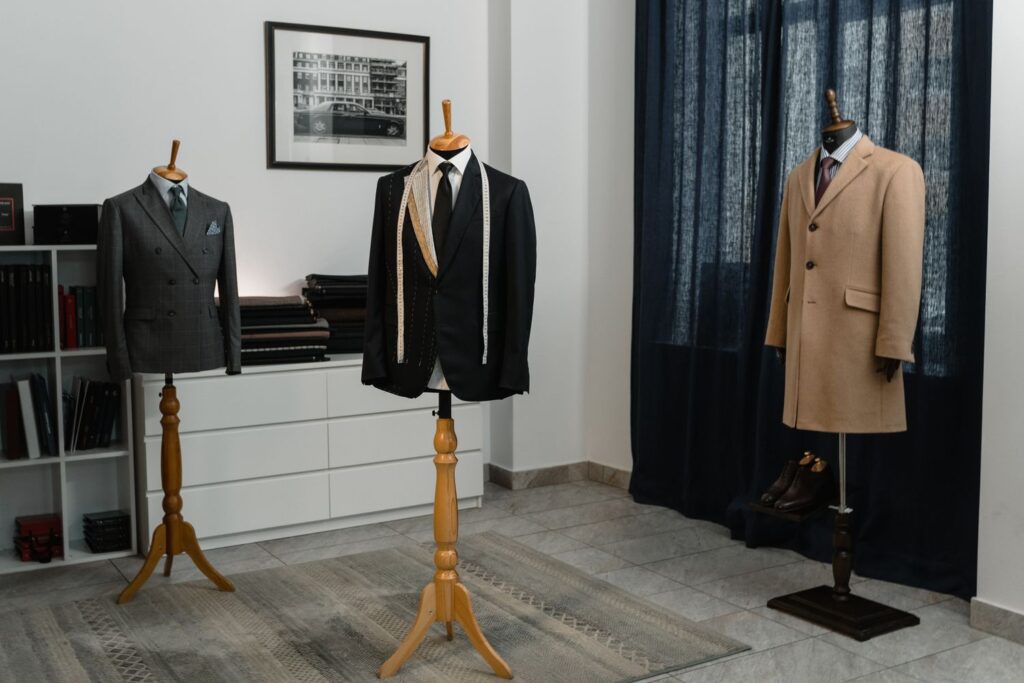
When it comes to producing premium-quality garments, fabric alone is not enough. The hidden structure inside a garment plays an equally important role in determining its appearance, durability, comfort, and overall performance. That hidden component is interlining.
Whether you manufacture business suits, formal shirts, uniforms, bespoke garments, trousers, jackets, or traditional Arabic thobes and kanduras, choosing the right interlining can significantly improve the final product.
In this guide, we’ll explain what interlining is, why it matters, the different types available, and how to select the best interlining for each garment.
What Is Interlining?
Interlining is a textile material placed between the outer fabric and the lining (or between layers of fabric) to provide structure, stability, shape, and reinforcement.
Unlike the outer fabric, interlining is usually invisible after the garment is completed, yet it has a major impact on how the garment looks and performs.
Interlining helps garments:
- Maintain their shape
- Improve wrinkle resistance
- Add body without excessive weight
- Reinforce collars, cuffs, waistbands, and fronts
- Enhance durability
- Create a clean, professional appearance
Without proper interlining, even expensive fabrics may lose their shape after repeated wear and washing.
Why Choosing the Right Interlining Matters
Not all garments require the same type of interlining.
Selecting the wrong product may result in:
- Bubbling after fusing
- Collar deformation
- Poor drape
- Reduced garment lifespan
- Inconsistent appearance
- Customer dissatisfaction
Professional garment manufacturers understand that interlining should always be selected according to:
- Fabric weight
- Fabric composition
- Garment construction
- End use
- Washing requirements
- Desired appearance
Types of Interlining
Fusible Interlining
Fusible interlining contains a heat-activated adhesive that bonds permanently to the garment fabric during the fusing process.
Advantages:
- Faster production
- Consistent quality
- Excellent dimensional stability
- Cost-effective
- Suitable for mass production
Common applications include:
- Shirts
- Jackets
- Uniforms
- Dresses
- Trousers
- Fashion garments
Non-Fusible Interlining
Non-fusible interlining is sewn into the garment instead of being fused.
Advantages:
- Softer natural drape
- Ideal for luxury tailoring
- Greater flexibility
- Preferred for bespoke garments
Common applications include:
- Bespoke suits
- Premium jackets
- Luxury tailoring
- High-end fashion
Choosing the Right Interlining for Different Garments
1. Jacket Interlining
Jackets require excellent structure while maintaining comfort and flexibility.
Good jacket interlining should provide:
- Chest support
- Front stability
- Lapel shape retention
- Long-lasting performance
The weight of the interlining should match the outer fabric. Heavy wool jackets need different support than lightweight summer jackets.
2. Suit Interlining
A premium suit depends heavily on the quality of its internal construction.
Proper suit interlining helps maintain:
- Sharp lapels
- Smooth fronts
- Natural drape
- Elegant silhouette
Luxury tailoring often combines interlining with shaping materials such as chest canvas, shoulder reinforcement, and sleeve head rolls for superior structure.
3. Shirt Interlining
Shirts require lighter interlining that provides crispness without stiffness.
Common areas include:
- Collar
- Collar stand
- Cuffs
- Front placket
The correct shirt interlining creates collars that remain neat after repeated washing while preserving comfort.
4. Trouser and Pant Interlining
Trousers also benefit from strategic interlining.
Typical applications include:
- Waistbands
- Fly areas
- Pocket openings
The right interlining improves durability while helping trousers retain their original shape over time.
5. Uniform Interlining
Uniforms experience frequent washing and daily wear.
Interlining for uniforms should offer:
- High durability
- Excellent wash resistance
- Reliable bonding
- Shape retention
- Consistent performance
Industries such as hospitality, healthcare, aviation, security, and corporate wear all benefit from quality interlining solutions.
6. Arabic Thobe and Kandura Interlining
Traditional garments across the GCC require a unique balance between elegance and practicality.
Interlining is commonly used in:
- Collar
- Collar stand
- Cuffs
- Front placket
The ideal interlining provides:
- A clean, crisp appearance
- Comfortable wear in warm climates
- Long-lasting shape
- Resistance to repeated laundering
Choosing the correct interlining helps maintain the refined look expected in premium Arabic thobes and kanduras.
Matching Interlining with Fabric Type
Every fabric behaves differently, so interlining should always complement the outer material.
Cotton
Works well with lightweight to medium-weight fusible interlining for shirts and casual garments.
Linen
Requires softer interlining to preserve linen’s natural drape while adding gentle support.
Wool
Often paired with medium to heavy interlining depending on the garment’s structure.
Polyester Blends
Compatible with a wide range of fusible interlinings designed for efficient production.
Stretch Fabrics
Require interlinings with flexibility to maintain comfort and prevent distortion.
Factors to Consider Before Selecting Interlining
Fabric Weight
Heavy fabrics require stronger support, while lightweight fabrics benefit from softer interlining.
Garment Style
A structured business suit needs different reinforcement than a casual shirt or lightweight jacket.
Washing Method
Consider whether the garment will be:
- Machine washed
- Dry cleaned
- Industrially laundered
The interlining should withstand the intended care process.
Climate
For garments worn in hot regions such as the UAE, Saudi Arabia, Qatar, Kuwait, Bahrain, and Oman, breathable and lightweight interlining can improve wearer comfort without compromising appearance.
Production Method
Large-scale manufacturers often prefer fusible interlining for production efficiency, while bespoke tailoring may incorporate non-fusible options for greater craftsmanship and flexibility.
Common Mistakes When Choosing Interlining
Avoid these common issues:
- Selecting interlining solely based on price
- Using heavy interlining with lightweight fabrics
- Ignoring fabric compatibility
- Incorrect fusing temperature
- Inadequate pressing conditions
- Overlooking wash and care requirements
- Using one interlining type for every garment
Proper testing before production helps achieve consistent quality and reduces manufacturing issues.
Benefits of High-Quality Interlining
Investing in premium interlining offers long-term advantages:
- Better garment appearance
- Enhanced comfort
- Improved durability
- Superior shape retention
- Reduced manufacturing defects
- Increased customer satisfaction
- Stronger brand reputation
Since interlining is a hidden component, its value is often measured by how well the finished garment performs over time.
Why Partner with FabriSoul?
At FabriSoul, we understand that every garment requires the right balance of structure, comfort, and performance. We supply high-quality interlinings and fashion shaping materials suitable for a wide range of apparel applications, including jackets, suits, shirts, trousers, uniforms, and traditional Arabic thobes and kanduras.
Serving garment manufacturers, tailoring houses, and fashion brands across the UAE, Saudi Arabia, Qatar, Kuwait, Bahrain, and Oman, we focus on delivering reliable materials that help create garments with a refined finish and lasting quality.
Conclusion
Interlining is one of the most important yet often overlooked components in garment manufacturing. The right choice enhances structure, comfort, durability, and overall appearance, while the wrong choice can affect both production quality and customer satisfaction.
By carefully considering fabric type, garment construction, intended use, and care requirements, manufacturers and tailors can select interlining solutions that elevate the final product.
Whether you produce formalwear, uniforms, bespoke garments, or traditional Arabic attire, investing in quality interlining is an investment in craftsmanship and long-term performance.